

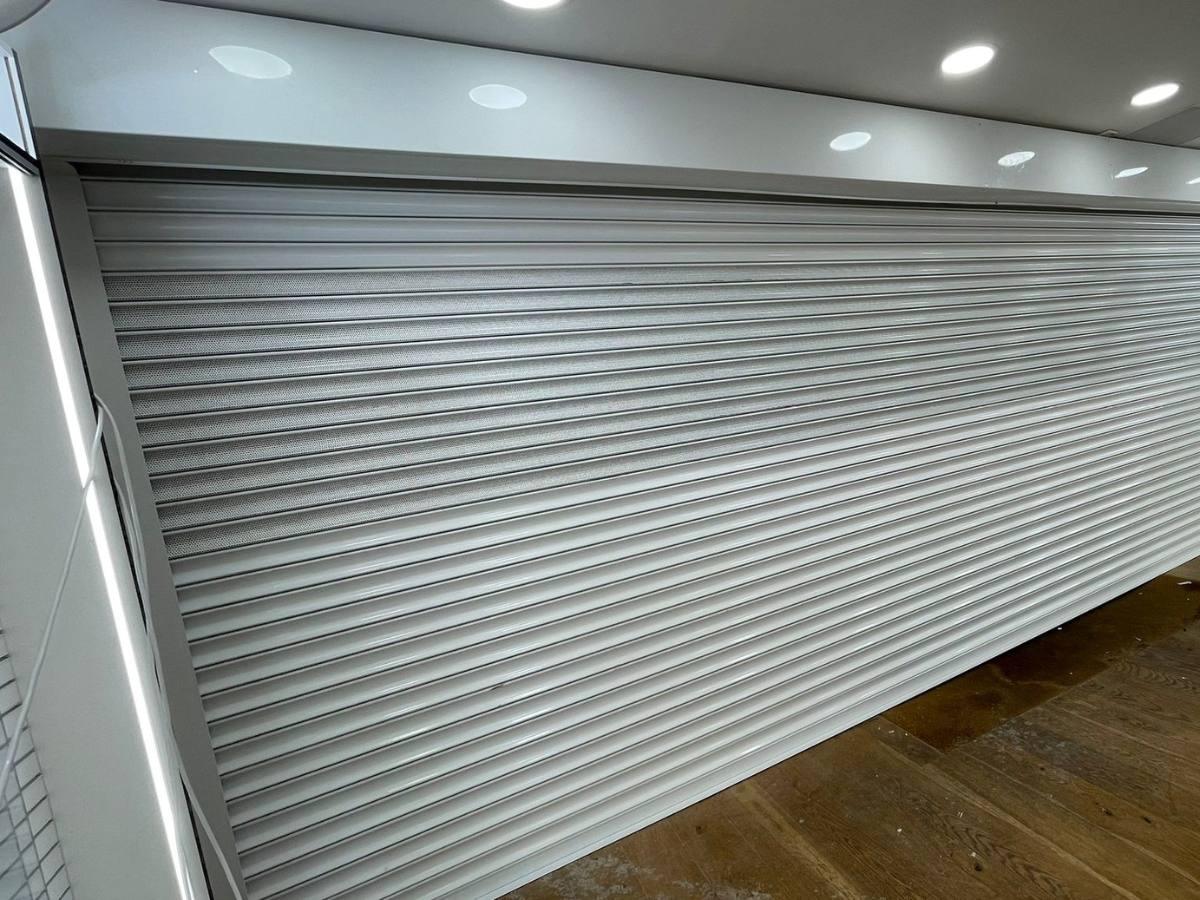
In London, electric shutter faults often result from wiring exposure, heavy daily use, and control wear, while manual shutters fail due to mechanical strain and misalignment over time.
When a shutter stops working, the first question engineers ask is simple: Is it manual or electric?
Engineers look for visible damage, track alignment, and whether the shutter can move freely without power.
For manual shutters, they focus on springs, straps, gears, and balance. For electric shutters, they test the power supply, control switches, motor health, sensor alignment, and limit settings.
At Redwood Shopfront, our 24/7 emergency engineers approach manual and electric roller shutter repairs with two very different checklists.
Symptom-to-Cause Quick Guide
- Motor hums but shutter doesn’t move: Power issue, control fault, jammed guides
- Shutter stops halfway: Incorrect limits, safety trigger, mechanical resistance
- Manual shutter feels heavy: Spring tension or guide misalignment
- Grinding or scraping noises: Barrel drift, damaged guides, slat issues
- Shutter reverses when closing: Safety edge activation or obstruction detection
How Engineers Diagnose Manual Shutter Problems
Manual shutters rely entirely on mechanical movement. When one fails, engineers work from load-bearing parts outward.
1. Spring Tension and Balance
The first thing checked is the spring tension inside the barrel.
Common issues:
- Shutter feels too heavy to lift
- Shutter drops suddenly
- Shutter won’t stay open
- Uneven movement when lifting
- Shutter will not stay open
An incorrect spring is the most common manual shutter fault. Forcing a shutter with spring issues can be dangerous, which is why engineers never recommend DIY adjustments.
2. Locks and Bottom Rail
Engineers inspect:
- Bullet locks
- Central locking systems
- Bottom rail alignment
In London shopfronts, locks often fail due to dirt buildup, rust, or forced closures after hours.
3. Guide Rails and Curtain Alignment
Misaligned guide rails are a major cause of stuck shutters.
Engineers check for:
- Bent rails
- Obstructions
- Worn end locks
- Warped shutter curtain
Manual shutters are especially sensitive to alignment because there’s no motor assistance to compensate.
4. Barrel and Axle Wear
Over time, the barrel can:
- Shift out of position
- Wear unevenly
- Cause grinding or scraping sounds
This is common in older London properties with legacy shopfront installations.
5. Slats, End Locks, and Stops
Finally, engineers inspect:
- Dented or twisted slats
- Missing or broken end locks
- Damaged stops
These issues often follow impact damage or attempted break-ins and should be repaired early to avoid larger failures.
What Engineers Check First on an Electric Shutter
Electric shutters add convenience but introduce electrical and safety components that must be checked in a strict order.
1. Power Supply and Isolator Switch
Engineers always start with power.
They check:
- Mains power supply
- Fused spur or isolator switch
- Tripped breakers
- Voltage reaching the motor
Many “dead” shutters are simply power-related, especially after storms or building work.
2. Control System (Switches, Remotes, Keypads)
Next, engineers test:
- Wall switches
- Key switches
- Remote receivers
- Access control systems
In London retail spaces, worn switches are one of the most common electric shutter faults.
3. Motor Function and Limits
If power is present, the motor is tested for:
- Burnout
- Overheating
- Failed capacitors
- Incorrect limit settings
Incorrect limits can cause shutters to:
- Stop halfway
- Overrun
- Reverse unexpectedly
4. Safety Sensors and Emergency Overrides
Modern electric shutters must meet UK safety standards.
Engineers check:
- Obstacle detection
- Safety edges
- Manual override operation
- Emergency stop functions
Faulty safety systems can prevent shutters from moving at all, even if the motor is fine.
5. Mechanical Components (Yes, Even on Electric Shutters)
After electrical checks, engineers inspect:
- Guide rails
- Curtain slats
- Barrel alignment
Electric shutters still rely on mechanical movement, and mechanical issues often cause electrical strain.
Manual vs Electric Shutter Repairs: Cost & Time Comparison
Costs vary based on shutter size, access height, motor type, and urgency.
| Repair Type | Typical Diagnosis Time | Repair Cost Range |
|---|---|---|
Manual Shutter |
20–40 minutes |
£120–£350 |
Electric Shutter |
30–60 minutes |
£150–£600+ |
If the estimated cost of repairs exceeds 50–60% of a new installation, or if the shutter is beyond its typical lifespan, replacement offers better long-term security and reliability.
Expert Guidance: Redwood Shopfront provides clear, upfront pricing on both repair options and new installations, ensuring you can make the best economic and security decision for your business.
What Affects the Final Price
- Brand and part availability
- Structural damage
- Whether ladders or scaffolding are needed
- Emergency vs scheduled visit
- Repair vs Replace
If the shutter is very old, structurally bent, or has repeated motor failures, engineers may recommend a full replacement instead of throwing money into short-term fixes.
What to Do Before an Engineer Arrives
- Do not force the shutter
- Stop using it if movement feels uneven
- Keep the area clear
- Avoid opening motor covers
- If safe, document the issue with photos or video
Which Shutter Type Is More Reliable in London?
| Manual shutters | Electric shutters |
|---|---|
✔ Fewer parts |
✔ Easier operation |
✔ Lower repair costs |
✔ Better for large openings |
✖ Harder to operate |
✖ More components to fail |
✖ Wear faster with heavy daily use |
✖ Higher repair costs |
For high-traffic London shopfronts, electric shutters are usually worth it, provided they’re maintained regularly.
Why London Properties Need Specialist Shutter Repairs
You should call a qualified shutter repair engineer if:
- The shutter feels unusually heavy
- The motor hums but doesn’t move
- The shutter stops mid-way
- You notice grinding, scraping, or jolting movement
- Safety systems stop the shutter from operating
Attempting DIY repairs on springs or motors can be dangerous and may invalidate insurance.
Preventing Repeat Shutter Breakdowns
Regular maintenance helps prevent costly failures:
- Keep guide rails clean
- Check fixings periodically
- Avoid impacts from vehicles or pallets
- Test electric safety systems regularly
- Service high-use shutters annually
London retail and industrial shutters experience heavier daily use, making planned maintenance especially important.
Shutter Repair Services in London by Redwood Shopfront
At Redwood Shopfront, we repair manual and electric shutters across London, handling everything from emergency call-outs to planned maintenance.
Our engineers:
- Diagnose faults fast
- Carry common parts on hand
- Work to UK safety standards
- Repair before recommending replacement
If your shutter isn’t working properly, getting it checked early can save time, money, and business disruption.
FAQ
Is it cheaper to repair a manual shutter than an electric shutter?
Usually, yes. Manual shutters often fail due to mechanical wear (springs, guides, locks), which can be simpler to fix. Electric shutters can involve motors, controls, or safety systems, which may increase parts and labour.
What’s the first thing an engineer checks on an electric shutter?
Power and controls: isolator/fused spur, breaker, wiring feed, and the switch or key control. If power is fine, the motor limits and safety systems are tested next.
Why does my electric shutter stop halfway or reverse?
This often points to limit settings, obstruction detection, a failing capacitor, or resistance in the guides; safety systems and alignment are checked.
My manual shutter feels heavy. What does that mean?
Most commonly, spring tension is off, the barrel is binding, or the guides are misaligned. Avoid forcing it; spring systems can be dangerous if handled improperly.
How can I tell if my shutter motor is burned out?
A humming noise with no movement or an overheating motor that shuts off are key signs; engineers test the motor independently to confirm.
Can I convert my manual shutter to electric?
Yes, as long as the shutter’s structure is solid. Engineers check shaft size, weight, and installation space before quoting a motor kit.
Do electric shutters still need mechanical repairs?
Yes. Even if the issue looks electrical, the curtain, guides, end locks, and barrel alignment matter. Mechanical drag can cause repeated electrical faults and motor strain.

As the lead technical writer for Redwood Shopfront, Tom has over 7+ years of hands-on experience in the London commercial property sector, establishing himself as a leading authority on shopfront design and high-security structural glazing. Helping business owners in high-traffic areas like Soho and Walthamstow navigate complex security requirements, including LPS 1175 and PAS 24 compliance. His work ensures that every storefront is not just visually striking, but fully secured against modern threats.
Comments are closed